
Later Life and Legacy
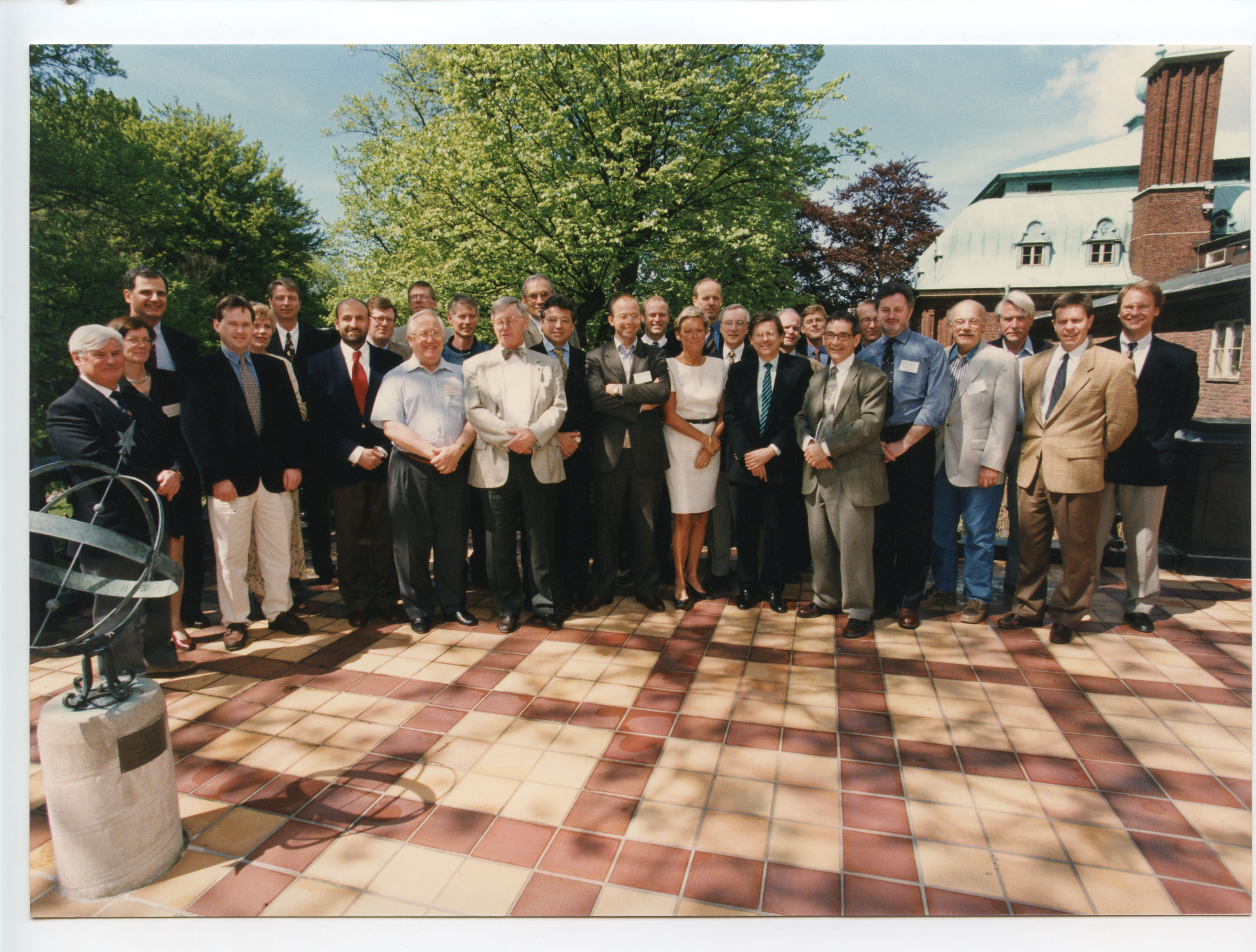
Brånemark (center left) with colleagues at an osseointegration conference, late 1990s, ACP Brånemark Collection, National Museum of Dentistry
Even as both his list of accomplishments and his age grew ever longer, he showed no signs of slowing down. The turn of the new millennia and the 2000s saw international travel for the Brånemark team.
Dental and medical professionals all over were eager to get the opportunity to meet Brånemark and hear him speak on his decades of work. He presented at conferences, symposiums, and seminars. He would consult with doctors from all over on cases, assisting with the surgical procedures and providing his expertise.
He would patent his designs for various titanium pieces used as part of the official Brånemark System in over 15 different countries.
He published the final two of his three published books, both on osseointegration. His dedication to his work was recognized again, and again, and again, as he was recognized and honored at prestigious institutions from all over, from the Harvard School of Dental Medicine, to the Swedish Society of Medicine, to the American College of Prosthodontists.
On December 20th, 2014, Dr. Per-Ingvar Brånemark would pass away from a heart attack at age 85, being survived by his wife Barbro, his longtime professional collaborator and companion, and a son Rickard, who followed in his father’s footsteps in the field of osseointegration.
Brånemark held more than 30 honorary recognition at the time of his death, including multiple lifetime achievement awards in both North America and Europe, and a place in the National Inventors Hall of Fame.
He left behind countless friends, colleagues, and patients who fondly remember him and his work, and a legacy quite unlike any other.
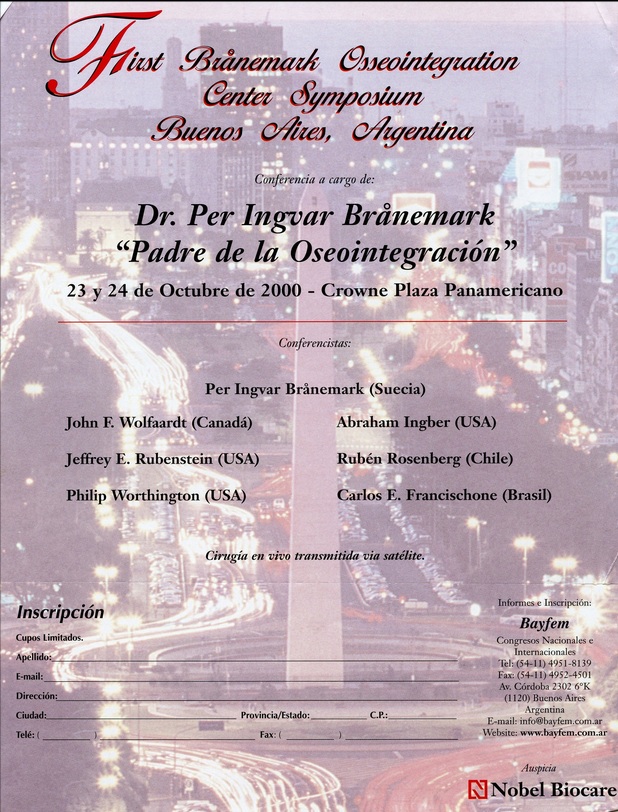
First Brånemark Osseointegration Center Symposium, Buenos Aires, Argentina Flyer, 2000, ACP Brånemark Collection, National Museum of Dentistry
The Legacy Continues
Since his death, modern technology has shown continued developments in the field of osseointegration, with the utilization of 3D printing and digital impressions in the creation of implants.
According to research published in 2018 in the Journal of Dental Research, the prevalence of dental implants as a replacement option rose from 0.7% in 1999 to 5.7% in 2015.
In 2018, it was projected to have increased to around 23% by the current year, 2026. Official ABOC’s can be found now in North and South America, Southeast and East Asia, Europe, the UK, Oceania, and the Middle East.
Dr. Ramesh Chowdhary of the Karnataka, India location of ABOC wrote in a 2020 article published in the Indian Journal of Dental Research how over 8,000,000 patients have been treated since 1965 with bone anchored implants of hearing aids, finger and thumb prostheses, and limb prostheses alone.
From that very first moment in his university lab in the 1950s, Brånemark never stopped championing the possibilities, benefits, and importance of his discovery of osseointegration. He did not just help progress the field of dentistry; he positively impacted innumerable lives.
“He taught us to keep our eyes on the horizon, not just on the work at hand. We are all the richer for having known him”
– Dr. Thomas Albrektsson, Professor Emeritus of the Dept. of Biomaterials at Gothenburg University, Sweden, Long-time Friend, Student, and Collaborator of Branemark, Nobel Biocare News, Per-Ingvar Branemark In Memoriam, Special Issue 2015
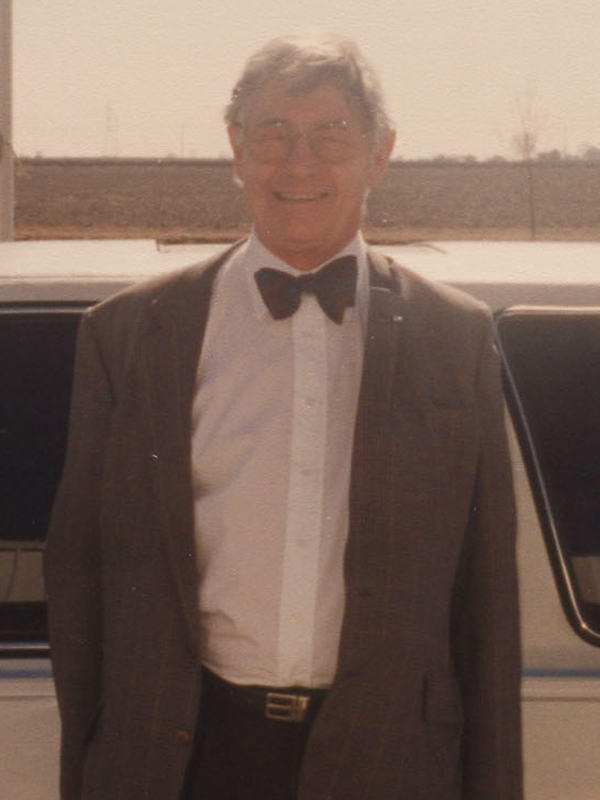
Per-Ingvar Brånemark, ACP Brånemark Collection, National Museum of Dentistry
“He taught us to keep our eyes on the horizon, not just on the work at hand. We are all the richer for having known him”
– – Dr. Thomas Albrektsson
Per-Ingvar Brånemark
Early Life and Career
Replacing Teeth
Osseointegration: Full Speed Ahead!
Later Life & Legacy
Acknowledgements & Additional Resources

Per-Ingvar Brånemark: Becoming the Father of Osseointegration has been made possible thanks to the generous gift of the Brånemark archival and object collection by Mrs. Barbro Brånemark to the American College of Prosthodontists and their subsequent donation of the collection and generous support to the museum.
hours
Tuesday - Friday: 10am to 4pm
Address
31 S. Greene St. Baltimore, MD 21201
nmd@umaryland.edu
Phone
410-706-0600
The Dr. Samuel D. Harris National Museum of Dentistry is an auxiliary enterprise of the University of Maryland, School of Dentistry at the University of Maryland, Baltimore.


