
Osseointegration: Full Speed Ahead!
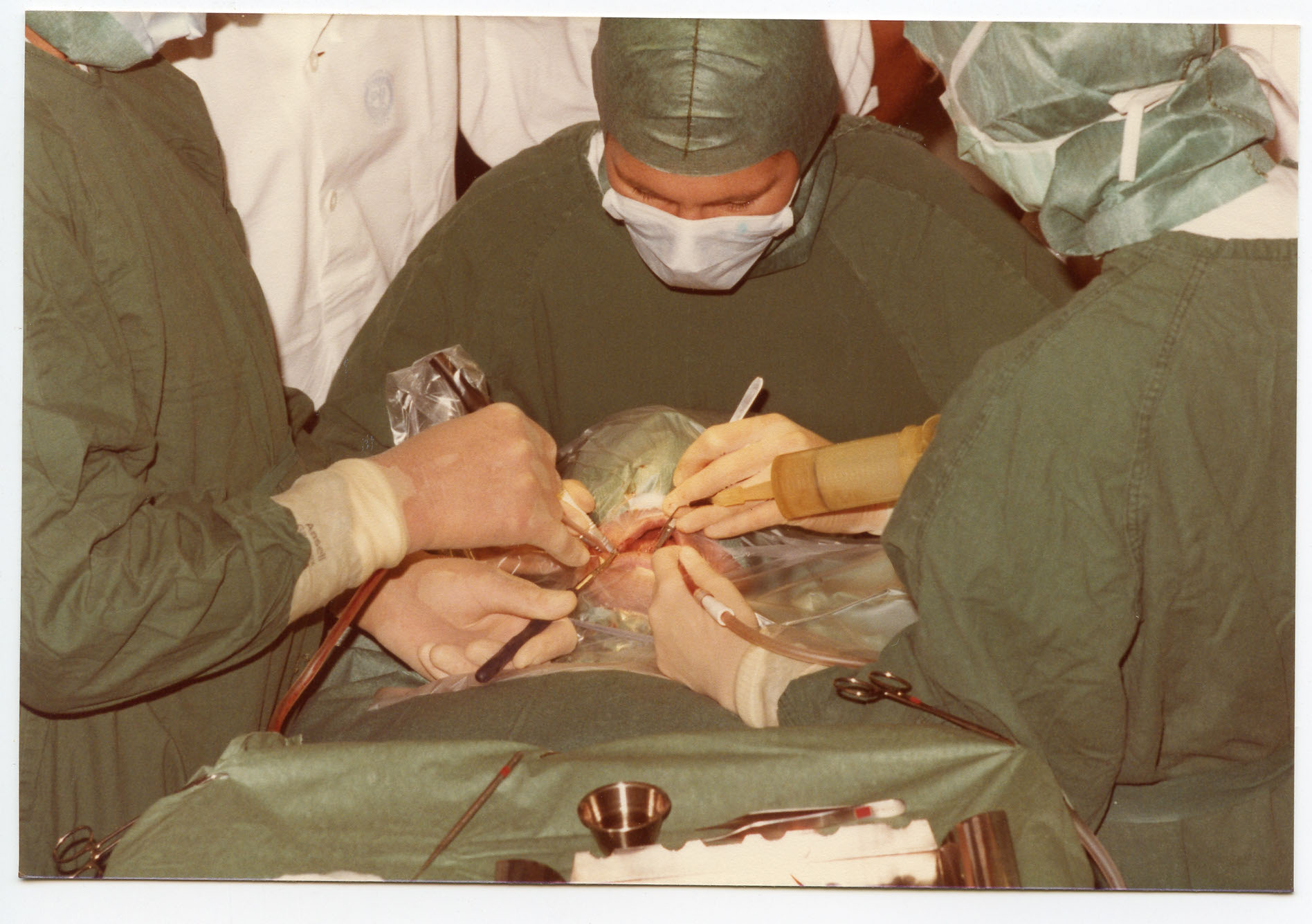
Nurse watching Brånemark and team perform an osseointegration procedure, late 1970s, ACP Brånemark Collection, National Museum of Dentistry
Brånemark saw not just how much there was a need for permanently anchored, long lasting artificial implants, but just how much he was able to improve Larsson’s quality of life through his work.
He and his team continued full force on their research and would publish their findings on this experimental work in the Scandinavian Journal of Plastic and Reconstructive Surgery in 1969, to interested, yet skeptical reactions.
He showed no signs of slowing down as the 1970s came around. A longtime proponent of the value of open scientific exchange and continued, long term research, Brånemark would continuously collaborate, clinically and professionally, with plastic surgeons, otolaryngologists, and orthopedic surgeons.
By 1976, he and his team implanted their first extra-oral implant, a cochlear using titanium implants. Just one year later, in 1977, he would establish the Institute for Applied Biotechnology in Goteborg, Sweden.
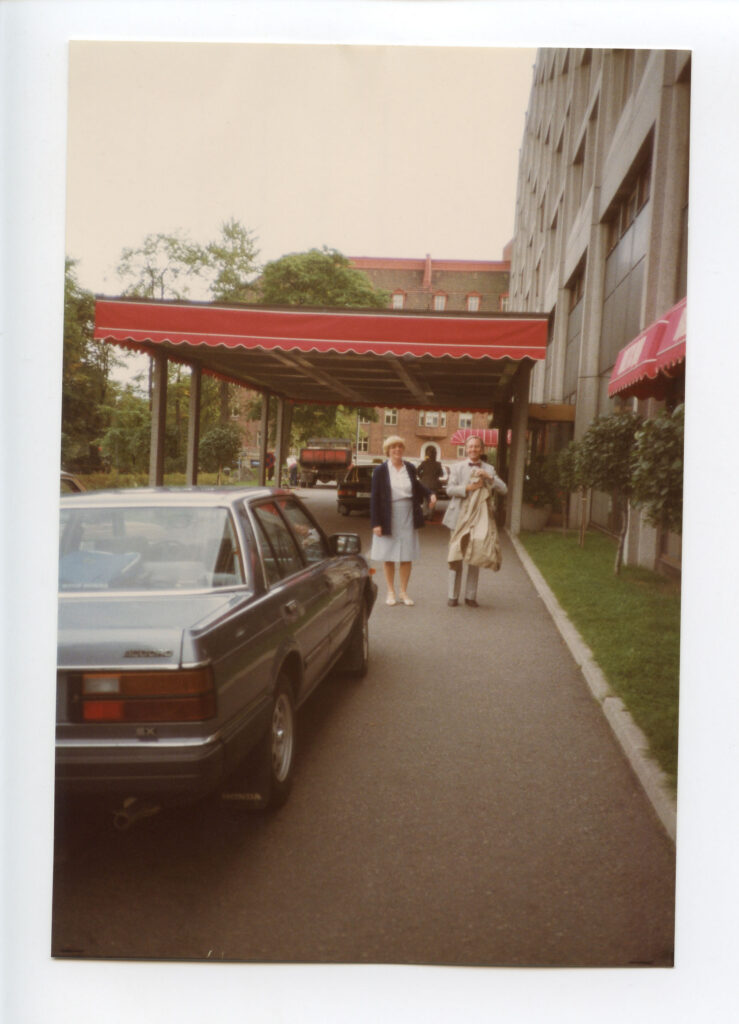
Brånemark and his wife, Barbro, in Australia to assist with a procedure in the late 1970s, ACP Brånemark Collection, National Museum of Dentistry
He continued his tireless work throughout the end of the decade, implanting several more cochlear implants, as well as maxillofacial implants for prosthetics in patients with facial deformities.
His follow-up and long-term studies conducted with his patients, for both oral and extra-oral implants, would prove that their implants had healed exceptionally well, seen successful bone growth, and were holding up excellently.
By 1981, just 16 years after working with his first patient, it was estimated that Brånemark had successfully placed over 3,000 osseointegrated implants.
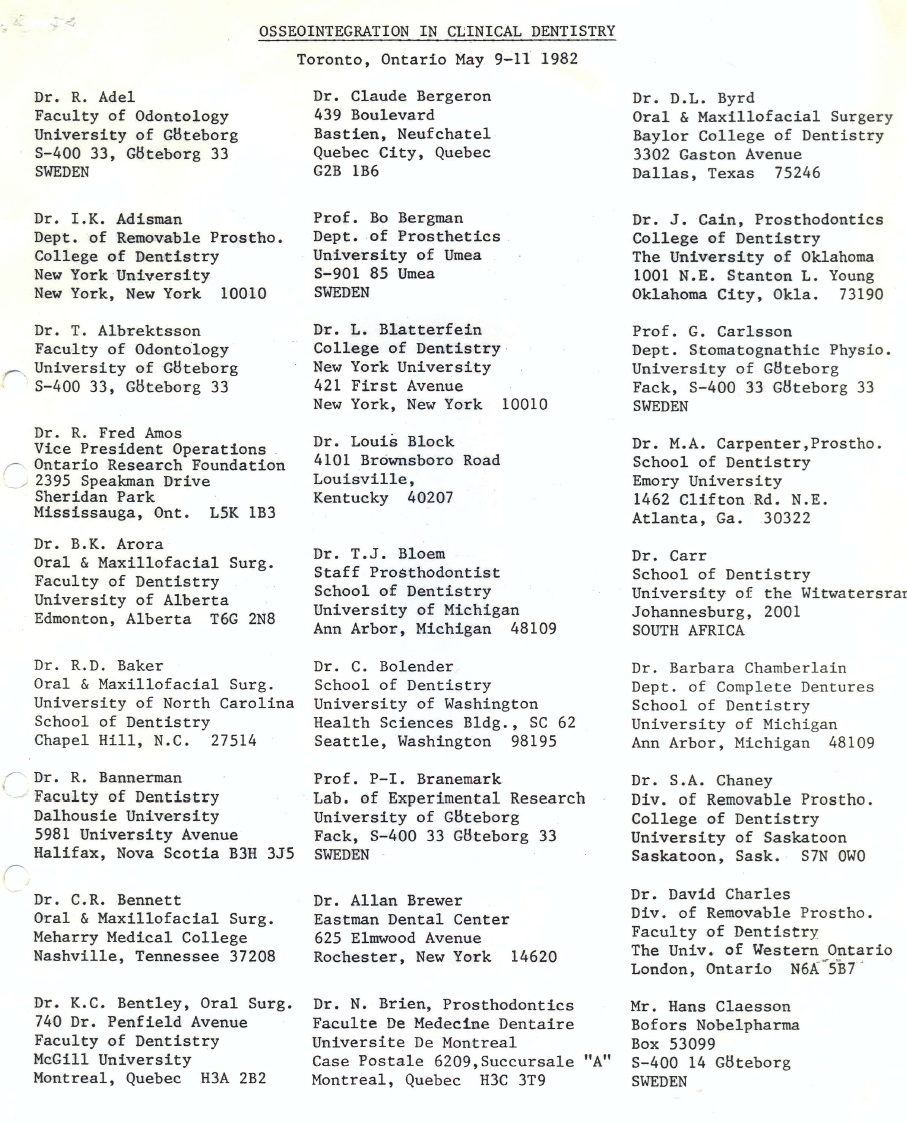
Osseointegration in Clinical Dentistry, Toronto, Ontario, May 9-11, 1982 Conference Attendee List, ACP Brånemark Collection, National Museum of Dentistry
Brånemark’s name can be found in the second column, seventh row.
After years of continued research and work on osseointegration since his first discovery of it almost two decades ago, Brånemark would formally present his research in 1982, at the first-ever conference with a focus on osseointegration, Osseointegration in Clinical Dentistry, in Toronto, Canada.
This now famous conference intrigued many professionals and raised interest internationally in osseointegration, weighing its benefits and complications to other bone anchored implants on the market.
1980s and Beyond
The same year as his presentation in Toronto, he would collaborate with Swedish dental implant manufacturer Nobel BioCare to bring what became known as the Brånemark System to the market.
Medical and dental professionals around the world were showing interest in this system, Brånemark, and his work, and more and more patients with previously very limited options for tooth replacement were being introduced to this groundbreaking new method.
The initial skepticism that it had once faced in an industry where, before Brånemark’s discovery and work, there was a belief that most foreign implants into the body had high rates of rejection was beginning to fade away.
A steadily growing number of people no longer had to struggle with uncomfortable dentures or simply live with tooth loss anymore.
In 1983, Brånemark would publish a history of his findings. He knew osseointegration was successful and extremely useful for prosthetics orally and facially and wanted to see how they might be able to be used in prostheses for wrist, elbow, knee, and hip joints, and in long bones like arms and legs.With big hopes for the future of osseointegration in the medical field, Brånemark was determined to continue spreading his work across the
globe.
He collaborated on research, consulted on and performed medical procedures with other medical and dental professionals, and helped teach and train entire teams on osseointegration and methods for oral and facial prostheses.
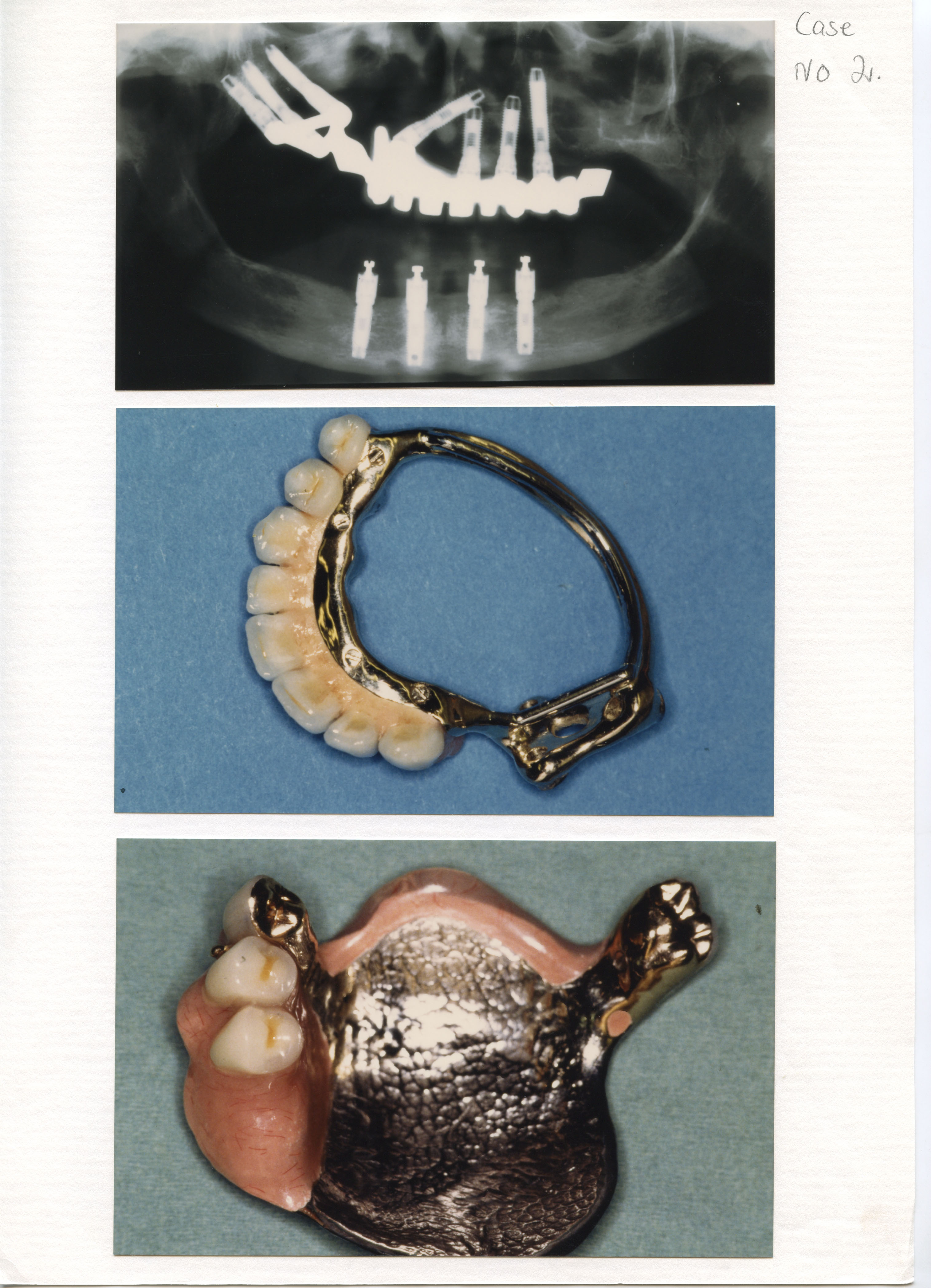
X-ray showing Brånemark system implants and partial dentures used to restore a patient’s smile, ACP Brånemark Collection, National Museum of Dentistry
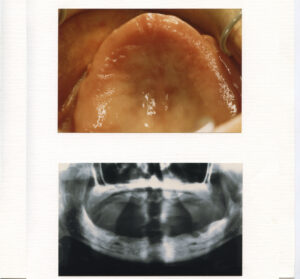
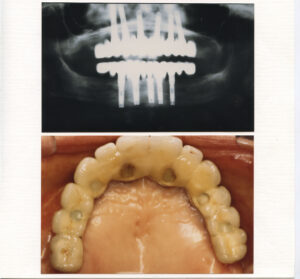
Before and after an osseointegration surgery performed by Brånemark’s, ACP Brånemark Collection, National Museum of Dentistry
Associated Brånemark Osseointegration Centers
In 1989, he founded the first Associated Brånemark Osseointegration Center (ABOC) in Goteborg, with the aim of helping patients deal with “severe oral, maxillofacial, and orthopedic challenges”. This would be the first of many centers he would establish around the world.
In 1990, his hopes to see osseointegration utilized in larger, more major prosthetics would come to fruition. Back in the late 1970s, osseointegration had been experimented with for finger prosthetics, but it had never been used for patients with major extremity amputations. But now, his system was utilized in the first patient to have bone anchored titanium implants for a major extremity: a woman who had suffered a bilateral transfemoral, or mid upper thigh amputation.
The surgery was performed in Sweden and resulted in resounding success. Not long after this initial procedure, osseointegration was becoming a viable option in orthopedic surgery for patients who had difficulty using traditional prostheses due to discomfort, skin irritation, poor fit, excessive weight, or poor body image. Osseointegration helped patients not just smile again, but live their lives to the fullest again.
All the success so far never once slowed down Brånemark’s desire to bring osseointegration and its life-changing benefits to as many people as possible. He collaborated with medical professionals to open branches of ABOC in nearly every continent! Some medical centers who had been using his system for years would eventually officially join to become part of the ABOC network.
Per-Ingvar Brånemark
Early Life and Career
Replacing Teeth
Osseointegration: Full Speed Ahead!
Later Life & Legacy
Acknowledgements & Additional Resources

Per-Ingvar Brånemark: Becoming the Father of Osseointegration has been made possible thanks to the generous gift of the Brånemark archival and object collection by Mrs. Barbro Brånemark to the American College of Prosthodontists and their subsequent donation of the collection and generous support to the museum.
hours
Tuesday - Friday: 10am to 4pm
Address
31 S. Greene St. Baltimore, MD 21201
nmd@umaryland.edu
Phone
410-706-0600

The Dr. Samuel D. Harris National Museum of Dentistry is an auxiliary enterprise of the University of Maryland, School of Dentistry at the University of Maryland, Baltimore.


