

What's one thing I can do today to improve my oral health?
A: Drink more water and brush twice daily for two minutes with fluoride toothpaste. Small, consistent steps make the biggest difference.
Tip: Keep a reusable water bottle nearby throughout the day. Every sip helps wash away bacteria, keeps your mouth moist, and reminds you to care for your whole body, not just your smile.
Does using a medium bristled brush or brushing harder mmake my teeth cleaner?
A: NO. Brushing harder or using a medium bristled brush can damage enamel and irritate gums, causing irreversible harm.
Tip: Use a soft-bristled toothbrush and low-abrasive toothpaste (avoid charcoal). Brush gently. An electric toothbrush with a pressure sensor helps protect teeth and gums.
Do I really have to floss?
A: YES. If you have all 32 teeth you are not cleaning approximately 40% of your teeth’s surfaces because brushing alone cannot reach in between and under your gum line.
Tip: Use flavored floss picks (coated with xylitol) to make flossing easier and taste great!
Why is dry mouth such a big deal?
A: Saliva washes away food, balances acids, and helps prevent cavities. A dry mouth from stress, medications, or dehydration allows harmful bacteria to thrive, increasing your risk for decay.
Tip: Chew sugar-free gum, breathe through your nose, and avoid alcohol-based mouthwashes.
I think a piece of my tooth chipped off! What should I do?
A: Tooth enamel is very strong, so sudden chipping without trauma is unlikely. Small chalky pieces are often tartar or a tooth-colored filling. If nothing feels sharp, your teeth are likely fine but see a dentist to be sure.
Tip: For sensitivity, apply potassium nitrate toothpaste to the tooth and cover with a retainer or nightguard before your visit.
I think my breath smells bad. Why? And what should I do about it?
A: Halitosis (bad breath) can come from foods or odor-producing bacteria, but it may also signal issues like tonsil stones, stomach problems, or gum disease.
Tip: If you scrape the back of your tongue with a spoon and sniff it, that’s likely what your breath smells like! Clean your tongue daily with a tongue scraper or toothbrush.
Are dental X-rays safe?
A: Yes. Dental X-rays are very safe and use tiny amounts of radiation. A set of bitewings equals about the same radiation as eating a few bananas. They are safe during pregnancy and breastfeeding when proper protection is used.
Tip: Ask if X-rays are needed, they help detect problems early.
Why do I need to see the dentist if my teeth don't hurt?
A: Gum disease and other dental issues begin quietly, meaning problems can start without pain. Regular dental visits help catch problems early, keep your teeth healthy, and prevent future pain.
Tip: Prevention is easier than repair. Regular checkups help catch gum disease and cavities before they turn into big and expensive problems.
What's the difference between a dental hygienist and a dentist?
A: At routine dental visits, you typically spend more time with your hygienist because hygienists focus on preventive care and education to stop disease before it starts, even when home care is good. Dentists, by contrast, diagnose and treat existing problems, and while hygienists can perform deep cleanings like scaling and root planing, they cannot diagnose periodontal disease.
What can I do when I become anxious?
A: A way to help is to distract yourself with healthy alternatives that do NOT involve your phone!
Tip: Try looking around and finding an object and spelling out the name of the object in your mind. Try describing a pair of shoes. Be creative! This helps you tune into your surroundings and not on what is making you anxious.
How can journaling improve my mental health?
A: Writing your thoughts helps organize emotions, reduce stress, and increase self-awareness. It’s like giving your mind a space to breathe and reset.
Tip: Try pairing journaling with brushing your teeth, write a quick thought before or after. It helps connect mental hygiene with oral hygiene, making both a daily habit.
What is therapy like? What can I expect?
A: Therapy may be in-person or online with a licensed therapist. In-person, you are guided to a private, quiet space. The therapist listens, may ask thought-provoking questions, and sometimes takes notes. Therapy provides a safe space to share your thoughts and feelings and support mental healing where needed.
Why is mental health just as important as physical health?
A: Your mental health affects how you think, feel, and act, influencing sleep, motivation, appetite, and self-care. A healthy mind supports a healthy body.
Tip: When brushing your teeth, take a moment to check in, notice your feelings, breathe deeply, and remind yourself you deserve care inside and out.
How do I know if I need help?
A: If sadness, anxiety, or stress happen often, or you no longer enjoy activities, reach out to a trusted adult or mental health professional.
Tip: Notice changes in appetite, sleep, or energy. Keep a “feelings journal” to track your mood, and if tough days add up, reach out for support.
Who can I talk to if I need help?
A: Remember, you are not alone, and support is available. Talk to friends, family, or professionals. Safe online communities can help if they are moderated by professionals. If you are in a crisis, reach out to a hotline immediately.
Tip: Make a short “support list” of three contacts and keep it accessible.
How can I start to love myself?
A: If you want to love yourself, that desire shows self-love already exists, because wanting good for yourself is an act of love.
Tip: Keep a gratitude journal, writing three things you are thankful for each day. Over time, you may notice and attract more good into your life.
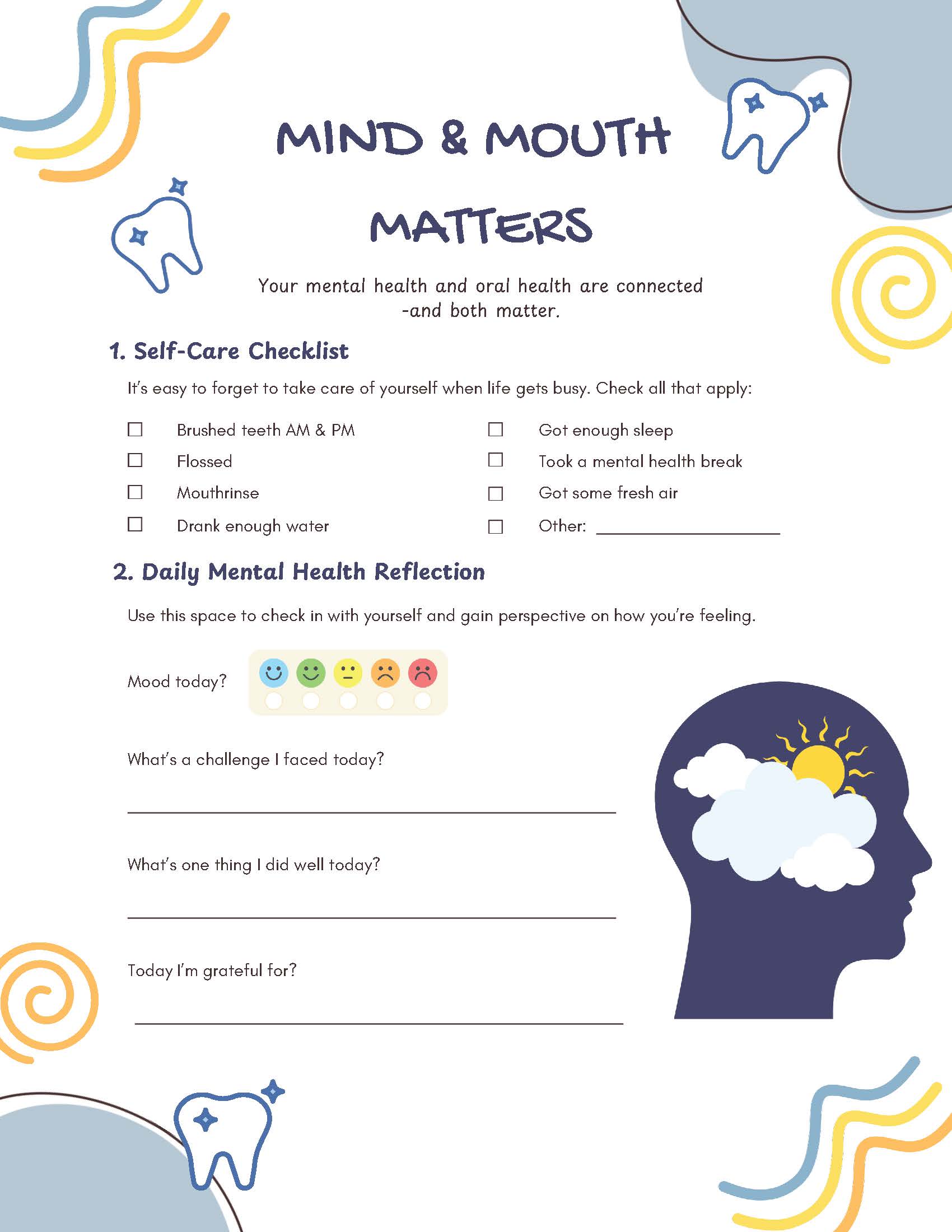
Mind and Mouth Matters has been developed as part of a Maryland Coalition for Allied Dental Education (MCADE) student engagement project by dental hygiene students from the Community College of Baltimore County.
If you or someone you know is struggling with mental health, help is always available.
Call or text 988 for the Suicide and Crisis Lifeline.
hours
Tuesday - Friday: 10am to 4pm
Address
31 S. Greene St. Baltimore, MD 21201
nmd@umaryland.edu
Phone
410-706-0600
The Dr. Samuel D. Harris National Museum of Dentistry is an auxiliary enterprise of the University of Maryland, School of Dentistry at the University of Maryland, Baltimore.


